.png?width=1530&height=510&name=PCW%20Logo%20(3).png)
 One of the biggest misconceptions in water treatment is that a high TDS reading automatically means poor water quality. It doesn't.
As water professionals, it's important that we understand what TDS actually measures so we can educate homeowners accurately and maintain credibility.
What is TDS?
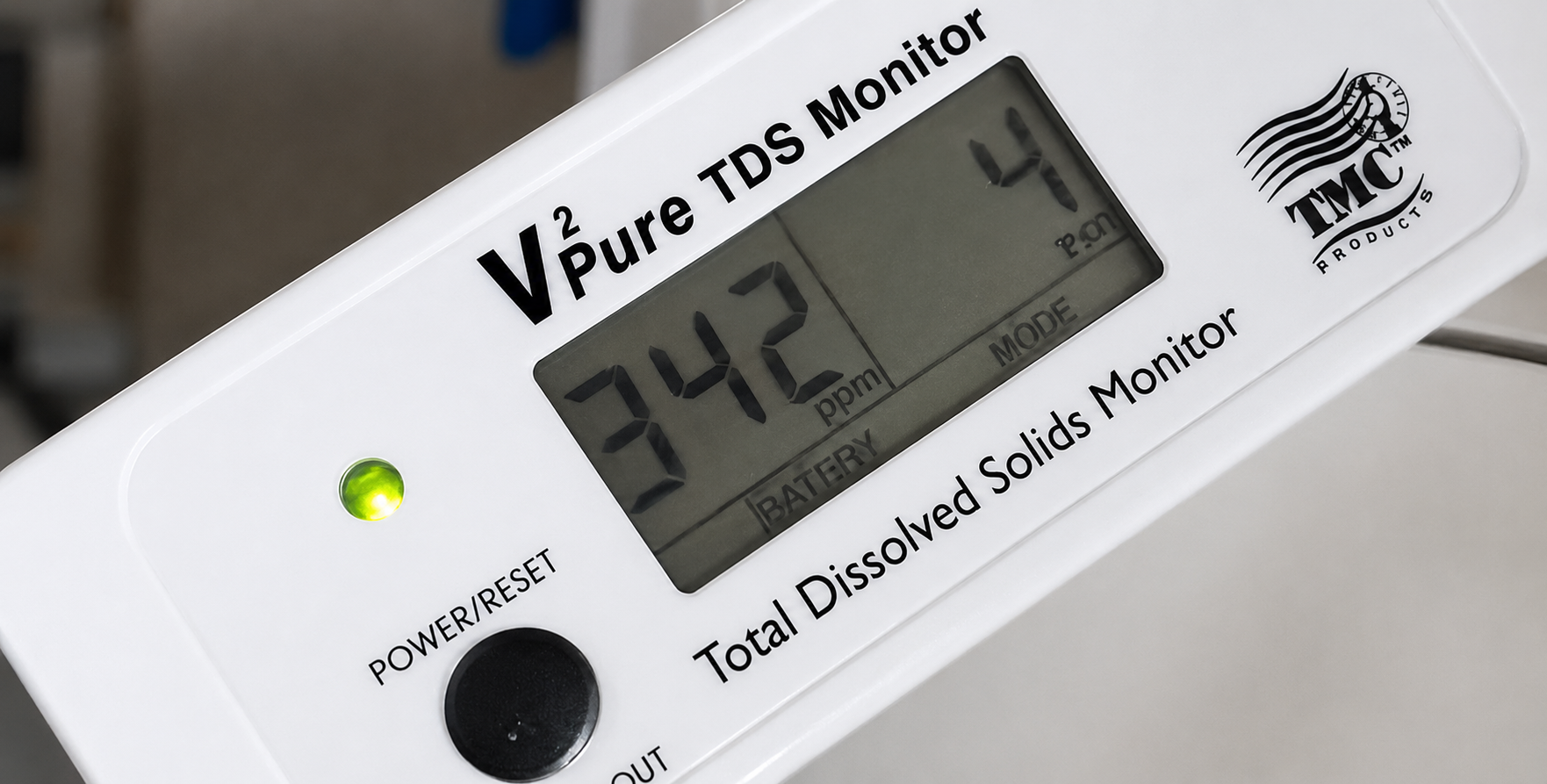
TDS stands for Total Dissolved Solids. A TDS meter measures the electrical conductivity of water and estimates the total amount of dissolved material present, expressed in parts per million (ppm) or milligrams per liter (mg/L).
The key word is total.
A TDS meter does not identify what those dissolved solids are—it simply measures how much dissolved material is in the water.
Those dissolved solids can include:
- Calcium
- Magnesium
- Sodium
- Potassium
- Bicarbonates
- Chlorides
- Sulfates
- Iron
- Naturally occurring minerals
- Small amounts of other dissolved compounds
The meter cannot distinguish between beneficial minerals and undesirable contaminants.
Why High TDS Does NOT Mean Bad Water
Municipal drinking water in the United States is regulated and must meet strict EPA standards.
Many municipal water supplies have TDS readings between 150 and 500 ppm, and some are even higher depending on the local water source.
A significant portion of that TDS often comes from minerals such as calcium and magnesium.
Those minerals:
- Are naturally occurring
- Are generally considered safe
- Can contribute to taste
- Are not health hazards
- Are actually essential dietary minerals
In other words, a water sample with 350 ppm TDS could simply contain healthy mineral content—not contamination.
Why TDS Can Be Misleading
Imagine two glasses of water.
Glass A
- 300 ppm TDS
- Mostly calcium and magnesium
- Excellent municipal drinking water
Glass B
- 300 ppm TDS
- Mostly sodium from a water softener
- Very little hardness
The TDS meter gives the exact same reading.
Yet the water chemistry is completely different.
Now imagine another glass:
Glass C
- 120 ppm TDS
- Contains trace PFAS or lead
The TDS meter might actually show a lower reading than Glass A, even though Glass C contains contaminants of much greater health concern.
The TDS meter cannot detect contaminants present in very small concentrations that may still have significant health implications.
What Happens After a Water Softener?
Many homeowners expect TDS to decrease after installing a water softener.
Often it doesn't.
Here's why.
A softener removes calcium and magnesium and exchanges them for sodium or potassium.
The amount of dissolved material stays nearly the same.
The minerals change—but the total dissolved solids remain similar.
Sometimes TDS even increases slightly because sodium conducts electricity differently than hardness minerals.
This is completely normal and does not indicate the softener isn't working.
Why Reverse Osmosis Lowers TDS
Reverse osmosis is different.
RO physically removes most dissolved ions from the water.
Because it removes dissolved solids instead of exchanging them, TDS commonly drops by 90–99%.
That's why a TDS meter is an excellent tool for verifying RO performance.
Better Tests for Municipal Water
Instead of relying on TDS alone, focus on tests that identify specific water issues.
Examples include:
- Hardness
- Chlorine or chloramine
- Iron
- Manganese
- pH
- Nitrate
- Copper
- Lead (when appropriate)
- PFAS (specialized laboratory testing)
- Taste and odor concerns
These tests provide actionable information that helps determine the right treatment solution.
The Bottom Line
TDS is a useful measurement—but it is not a water quality score.
Think of it like stepping on a scale.
Your weight tells you how much you weigh, but it doesn't tell you whether you're healthy.
Similarly, TDS tells you how much dissolved material is in the water, but it does not tell you whether that material is beneficial, harmless, or harmful.
As water treatment professionals, our goal isn't to sell based on a TDS number. Our job is to understand the customer's water, identify the specific issues present, and recommend treatment that solves those issues.
That's how we build trust, educate homeowners honestly, and create customers for life.